Monday, June 28, 2021

Tuesday, June 29, 2021, World History: Day 10


First Hour Google Meeting 
Bolshevik Revolution 1917
Into 5 minutes: Standards, Objectives, Attendance, Agenda, and Pledge of Allegiance
Objectives: SWBAT
  • Describe the Russian Revolution.
Review 5 minutes: Homework and material covered over the break.
Lecture 20 minutes: World War I.
Reading 20 minutes: Wilson's Fourteen Points,  Fourteen Points 
  1. Summarize Wilson's Fourteen Points
  2. What is the Fourteenth point?
  3. Are they realistic? 
Describe the following 15 minutes: Paris Peace Conference, Treaty of Versailles, and a New Map of Europe.

Independent Work
Video 15 minutes: Crash Course World War I
  1. According to Crash Course what were the causes of World War I for the United States?
  2. What were the effects of the American involvement in World War I?
  3. How did the war change the power of the government?
Time Line 30 minutes: Create a World War I annotated Timeline 
  1. Pic Ten 
  2. Pictures
  3. Background Information
Questions 10 minutes: At what point would you demand changes in the government and why?
Reading 30 minutes: Romanov Family
  1. Summarize
  2. Research Two Sources
  3. Opinion
Comic 40 minutes:p.389
  • The Rise of Bolsheviks
  • Civil War in Russia
  • Triumph of the Communists

Second Google Meet
Lecture 20 minutes: Russian Revolution
Photo Analysis Activity 20 minutes:
Great Depression U.S.: Photo Essay
  1. View Five Photo's 
  2. Describe each photo in detail
  3. Analyze what each says about the Great Depression.
  4. Write a Paragraph describing the Great Depression in the United States based off of your analysis of the photos.
Last Hour Work
Video 15 minutes:
Crash Course the Great Depression
  1. According to Crash course what were the causes of the Great Depression?
  2. What is the problem with deflation? 
  3. What was the Hawley-Smoot Tariff?
  4. Did Hoover do enough? Why or why not?
  5. What did Hoover do to try and combat the Great Depression? 
  6. How many people were out of work during the Great Depression?

Define following Terms 20 minutes:
  1. Dawes Plan, Treaty of Locarno
  2. Weimer Republic
  3. John Maynard Keynes
  4. Franklin Delano Roosevelt 
  5. New Deal.
Extra Credit 
Inquiry: If aliens came down from outer space how would they treat us? What would they want from us?
Reading: Background Orson Welles War of the Worlds
Listening: Orson Welles "War of the Worlds" 1938
Script:War of the Worlds Script
Questions:
  1. How would you react if you were sitting at your home listening to this broadcast and not realize that this was a prank/radio program?
  2. How does the story of "War of the Worlds" relate to imperialism of the 19th century?
  3. Based on the reaction of people to this radio program, what does it say about the power of media on the public?
VideoOrson Welles Apology
  1. What are your thoughts on Welles explanation to the radio broadcast?
  2. What are his reasons for thinking the reaction wouldn't be that strong?
Closing 5 minutes

Thursday, June 24, 2021

Monday and Wednesday, June 28 & 30, 2021, World History: Day 9 & 11

 Do this for both Monday and Wednesday

  1. Collect three current events for the same topic from different news sources. Current Events
  2. Analyze the three different articles and sources. Which do you find more trustworthy and balanced? why?  
  3. For each gather the who, what, when, where, and why. 
  4. Why is this topic important to you, the United States, and the World? 
  5. What does it say about possible outcomes for the future?
Films 
  1. Find one film for each for the following topics:Great Depression & World War I. (These films can be documentaries or historical fiction (your choice). 
  2. Cite the film using MLA format and make sure it is appropriate. 
  3. Based off of your current knowledge or knowledge gained through reading the text, is this film accurate and informative? 
Field Trips 
  1. Choose a museum to visit. 
  2. Create a Snapchat like story with at least twenty pictures/videos
  3. Story should provide things you learned during your visit. 
Reading 
  1. Ch. 13 p. 360-380
  2. Ch. 14 p. 386-405
Assessments
  1. Ch. 13 p. 384 #1-20 Critical Thinking #1-4 
  2. Ch. 14 p. 410 #1-20 Critical Thinking #1-4

Thursday, June 24, 2021, World History: Day 8


http://upload.wikimedia.org/wikipedia/commons/1/11/The_Qing_Dynasty_Ci-Xi_Imperial_Dowager_Empress_of_China_Photographed_in_1900s.PNG
Empress Dowager Ci Xi


First Hour Meeting
Into 5 minutes: Standards, Objectives, Agenda, Attendance, and Pledge of Allegiance
Standards: 10.4, 10.4.2, 10.4.3
Objectives: SWBAT
  • Describe the changes that led to the decline of the Qing dynasty, including the Opium War, the Tai Ping Rebellion, and the Boxer Rebellion.
  • Discuss the self-strengthening reforms of the Qing Dynasty.
  • Trace the increase of Western involvement in China.
Prepare for Test 2 15 minutes: Review study guide.
Test 30 minutes: Students take Test 2

Independent Work 
Vocabulary 25 minutes: Define, Significance, and Draw
  1. Guangzhou
  2. Chang Jiang
  3. Hong Kong
  4. extraterritoriality
  5. Hong Xiuqan
  6. self-strengthening 
  7. Spheres of Influence
  8. Guang Xu
  9. Empress Dowager Ci Xi
  10. John Hay
  11. Open Door Policy
Assessment 45 minutes: p. 410 #1-20 Critical Thinking #1-4
Poster 25 minutes: Opening the Door to China and Boxer Rebellion p. 338-339
  • Summary
  • Significance
  • Create an Image
Video 20 minutes: Chinese Revolution
  1. Who is Sun Yat-sen?
  2. What are three principles of the people?
  3. Why was the Revolution successful in 1911?
  4. What kind of government did China have right after the 1911 revolution?


Second Hour Meeting 
Lecture: Opium War,  The Tai Ping Rebellion, Revolution in China, and Japan

Last Hour Independent Work
Reading 20 minutes: What is a Samurai?  

Vocabulary 20 minutes: Define and Significance 
  1. Matthew Perry
  2. Edo Bay
  3. Millard Fillmore
  4. Kyoto
  5. Mutsuhito
  6. prefectures
  7. Ito Hirobumi
Closing 5 minutes: Review Objectives.


Monday, June 21, 2021

Tuesday, June 22, 2021, World History: Day 6

 First Hour Meeting

David Livingstone was a Scottish missionary, abolitionist and physician known for his explorations of Africa, having crossed the continent during the mid-19th century.


Into 5 minutes: Standards, Objectives, Attendance, Agenda, and Pledge of Allegiance
Objectives: SWBAT
  • Describe the Life of David Livingstone
  • Discuss how European countries were able to colonize Africa and Asia
  • Discuss why the European's wanted to colonize Africa and Asia.
  • Describe New Imperialism.
Warm Up 10 minutes: Review work over the recess Study Guide Industrialization
SHEG Factory Life 45 minutes

Independent Work 
Reading 20 minutes:
  1. Who is Dr. Livingstone?
  2. What were two of Dr. Livingstone’s reasons for exploring Africa?
  3. What waterfall did Livingstone encounter on his trip from the interior to the mouth of the Zambezi River ?
  4. What were the main obstacles that Livingstone faced?
Watching 20 minutes: Imperialism
  1. What is Imperialism?
  2. What areas where Europeans interested in imperializing?
  3. Why were they interested in imperializing these areas?
Map Practice 15 minutes: Geography Practice
Sepoy Mutiny 40 minutes: SHEG
Listening 10 minutes: Ravi Shankar 
  1. How did Imperialism benefit and cost people being colonized?
  2. What was Colonial Rule like in Southeast Asia?
  3. What was Colonial Rule Like in India?
Vocabulary 25 minutes: Describe and Significance
  1. mestizos
  2. Creoles
  3. Jose de San Martin
  4. Simon Bolivar
  5. Monroe Doctrine
  6. caudillos
  7. Antonio Lopez de Santa Ana
  8. Benito Juarez
Second Hour Meeting
Notes 20 minutes: Ch. 6.3 British Rule in India

Last Hour Work
SHEG 45 minutes: Battle of Adwa
Closing 5 minutes

Sunday, June 20, 2021

Monday and Wednesday, June 22 & 24, 2021: Day 5&7

 Do this for both Monday and Wednesday 

  1. Collect three current events for the same topic from different news sources. Current Events
  2. Analyze the three different articles and sources. Which do you find more trustworthy and balanced? why?  
  3. For each gather the who, what, when, where, and why. 
  4. Why is this topic important to you, the United States, and the World? 
  5. What does it say about possible outcomes for the future?
Films 
  1. Find one film for each for the following topics: Anything we have talked about so far & Industrial Revolution. (These films can be documentaries or historical fiction (your choice). 
  2. Cite the film using MLA format and make sure it is appropriate. 
  3. Based off of your current knowledge or knowledge gained through reading the text, is this film accurate and informative? 
Reading 
  1. Ch. 8 p. 220-242
  2. Ch. 9 p. 250-273
  3. Ch. 10 p. 276-299
Questions
  1. Ch. 8 Assessment p. 244-245 #1-20, Critical Thinking #1-4
  2. Ch. 9 Assessment p. 274-275 #1-20, Critical Thinking #1-4
  3. Ch. 10 Assessment p. 300-301 #1-20, Critical Thinking #1-4
Please bring completed work on Tuesday to be reviewed during class. If you have any questions, please email at jgaylord@cefacademy.com

Thursday, June 17, 2021

Friday, June 18, 2021, World History: Day 4


Fall of the Bastille
First Hour Meeting
Into: Standards, Objectives, Agenda, Attendance, and Pledge of Allegiance
Standards: 10.2.4
Objectives: SWBAT
  • Describe the social inequalities that contributed to the French Revolution.
  • Describe the economic problems that contributed to the French Revolution.
  • Understand why certain groups opposed the new order.
Warm Up 10 minutes: Please locate France on a map. What countries are next to it?
Video 20 minutes: French Revolution  
  1. Students independently watch video. Teacher can project video using incognito for in-person students.
  2. Summarize five things that happened during the French Revolution.
  3. What three things in the video match-up with your reading?
  4. Teacher review 
Reading 20 minutes: p. 193-196 #1-4 Potentially split of question among students to complete and share with classmates. 
Lecture 20 minutes: Beginning of the French Revolution (If you do not feel comfortable covering this, I will do it the second meeting). 

Independent Work 
Analyzing 25 minutes: Declaration of Rights of Man
  1. Who, What, When, Where, and Why
  2. How might it relate to the Glorious Revolution, American Revolution?
  3. How might it relate to the Enlightenment Thinkers and the Enlightenment?
Reading 20 minutes: p. 197-203 #1-4
Reading 20 minutes: Haitian Revolution
  1. Three Facts
  2. Two Questions
  3. Summary
Videos 25 minutes:
  • Origins of the French Revolution 
    • Point out as many things similar to what you read about, and talked about in class.
    • What do you understand better about the origins of the French Revolution? 
  • Reign of Terror 
    • Point out as many things similar to what you read about, and talked about in class.
    • What do you understand better about the Reign of Terror? 
  • French Revolution Song 
    • Point out as many things similar to what you read about, and talked about in class.
    • What did this song make more clear? 
Define and give significance to the following key terms 20 minutes:
  1. Napoleon Bonaparte
  2. Corsica
  3. consulate
  4. Civil Code
  5. Nationalism
  6. Moscow 
  7. Elba
  8. Waterloo
  9. Duke of Wellington
Second Hour Meeting 
Lecture 25 minutes: Beginning of the French Revolution,  Reign of Terror, and  Age of Napoleon

Last hour meeting 
Closing 5 minutes: Review Objectives. 

Thursday, June 17, 2021, World History: Day 3


Louis XIV Divine Right of Kings

First Hour Google Meet
Into: Standards, Objectives, Agenda, Attendance, and Pledge of Allegiance
Standards: 10.2, 10.2.1, 10.2.2
Objectives: SWBAT
  • Define absolutism and explain the basis for the power of absolutist monarchs.
  • Identify the causes of the Glorious Revolution in England.
  • Explain the effects of the Glorious Revolution on the principle of representative government.
  • Explain how the ideas of the Scientific Revolution led to the Enlightenment.
  • Describe the tenets of Enlightenment thought.
  • Give details about how scientific methods were applied to the social sciences.
  • Recount the reasons for the spread of the Enlightenment.
Review 10 minutes: Ch. 1.4 #1-3
Lecture 20 minutes: Glorious Revolution Ch. 2.1
Reading minutes 20 minutes: Compare English Bill of Rights and Bill of Rights 
  1. Who, What, When, Where and Why
  2. List Three similarities
  3. List Three Differences
  4. How does this prove that the Glorious Revolution is important?
Video 10 minutes: Isaac Newton Scientific Revolution
  1. Why is Isaac Newton so important?
Independent Work 
Reading 25 minutes: p. 157- 159 #1-4
Reading 25 minutes: p. 165- 170 #1-3
Questions 40 minutes: The Enlightenment
  • What is the Enlightenment?
  • Please identify the major contributions of each of the following Enlightened Thinkers
    • John Locke
    • Isaac Newton
    • Montesquieu
    • Voltaire
    • Rousseau
    • Wollstonecraft 
  • Based off of your previous knowledge, how might have each of these thinkers influence the American Revolution? 
Reading 25 minutes: p.178-182 #1-4

Second Hour Meeting 
Lecture 25 minutes: Enlightenment
Reading 25 minutes:
  1. Who, What, When, Where, and Why of the Declaration of Independence.
  2. Pick out five examples of each document being influenced by the Enlightenment and the Thinkers.
Last Hour Work
Video 20 minutes: French Revolution 
Assessment 20 minutes: Ch. 2.3 #1-6
Closing 5 minutes: Review Objectives.

Wednesday, June 16, 2021

Wednesday, June 16, 2021, World History: Day 2

First Hour Google Meet

Into: Standards, Objectives, Agenda, and Attendance

Standards: 11.1.3, 11.3.1, 11.3.2, 11.3.3, 11.10.7

Objectives: SWBAT
  • Describe the influence of Roman Law on Western Civilization.
  • Compare and Contrast World Religions on Western Civilization.
Warm Up 15 minutes: What's in a Name 
Current Events 20 minutes: Current Events
1.     Who, What, When, Where, and Why
2.    Why is the article important to you, the United States, and the World?
3.    Does it say anything about the future?
Map Quiz 10 minutes: Europe
Lecture 15 minutes: Rome and the Rise of Christianity

Independent Work
Comic 25 minutes: p. 148-151
1.     The Development of Christianity
3.    Final Triumph
4.    Roman and Christina Values
Vocabulary 25 minutes: Describe and Significance
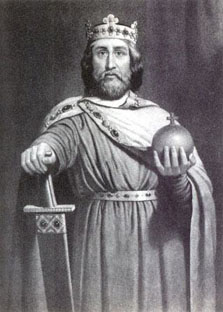
1.     Charlemagne
2.    Middle Ages
3.    feudalism
4.    Common Law
5.    Magna Carta
6.    Parliament 
7.    Renaissance
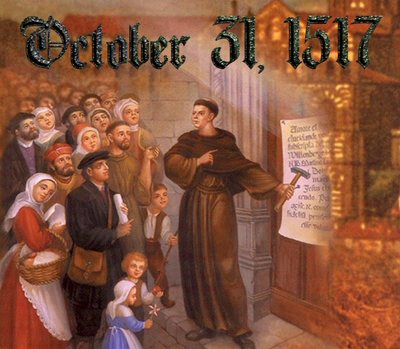
9.    Martin Luther
Comparing and Contrasting 30 minutes: Religion p. 612-626
  • Pick Three Religions to Compare and Contrast its History and Beliefs, and Worship and Celebrations.
  • Collect One outside source for each religion that discusses History, Beliefs, Worship, and Celebrations of those religions.
  • Use easybib to reference each outside source.
Country project 40: Name, Laws, Government, Religion, and Celebrations.

Second Hour Meeting 
Lecture 20 minutes: Ch. 1.4 New Patterns of Civilizations
Presentations 20 minutes: Students Present their countries

Independent Work
Reading 25 minutes: Ch. 1.4 #1-3 p. 22-27
Closing 5 minutes: Review Objectives